8 Cleanest Beaches in Goa: Clear Water, Quiet Spots & 2026 Guide
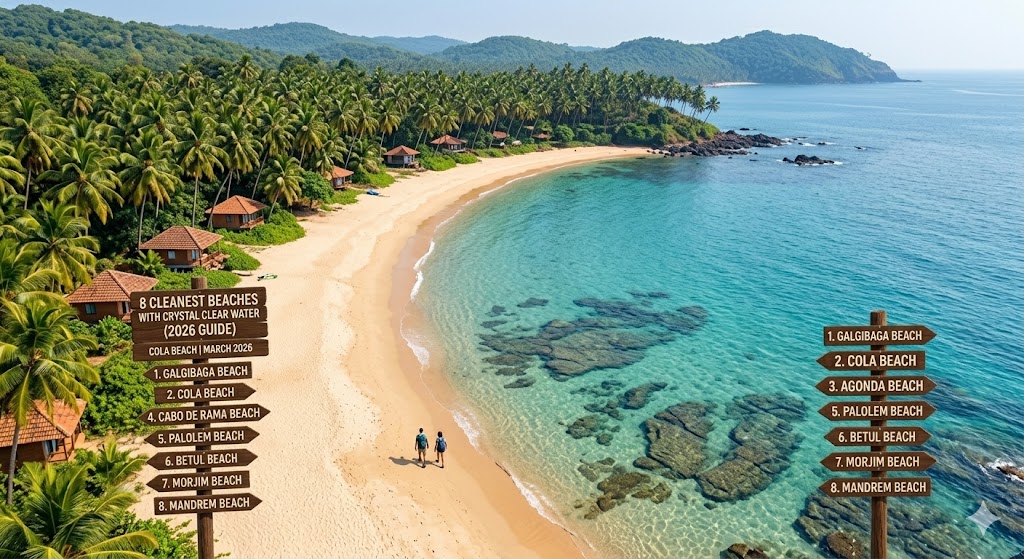
Goa is home to some of the most beautiful beaches in India, but if you've ever stood on Baga or Calangute on a Saturday evening, "peaceful" isn't the word that comes to mind. The cleaner, clearer beaches tend to sit further from the party strip — mostly in South Goa, where the coastline hasn't been built up in quite the same way, and a few pockets of North Goa that have managed to stay under the radar.
What actually makes a beach "clean" here comes down to a few practical things: how many big resorts and shacks line the shore, whether it's protected land (like a turtle nesting site), and simply how hard it is to reach. The beaches on this list are included because they combine factors such as lower development, quieter surroundings, sheltered sections or limited access.
September 2026 planning note: Goa is still within the monsoon period, so sea conditions and water clarity can change quickly after rain or rough weather. For clearer water and calmer beach conditions, the post-monsoon period is generally a better choice; always check local sea conditions before swimming.
If you're looking for relaxing beach destinations with natural beauty rather than a party scene, these are the cleanest beaches in Goa worth building a trip around — led by Palolem, Agonda, and Galgibaga, and rounded out below with five more.
Quick Answer
Palolem Beach is a strong all-round choice for travelers who want a scenic, relatively sheltered beach with good access to services. Agonda and Galgibaga follow close behind — Galgibaga in particular stays pristine because it's a protected turtle-nesting site with limited development. For the single clearest water, locals point to Butterfly Beach and Cola Beach, both of which are hard to reach and see very few visitors as a result.
Key Takeaways
- Several quieter South Goa beaches have less development and lower visitor density than the busiest North Goa beaches.
- The beaches that stay cleanest are usually the hardest to reach — boat access (Butterfly Beach) or a short trek (Kakolem-adjacent stretches) naturally limits footfall.
- Water clarity is seasonal and can change with rainfall, waves, runoff and local sea conditions; the post-monsoon and dry-season months are usually better for clear-water viewing.
- Sheltered bays such as Palolem and Agonda can feel calmer than exposed beaches, but monsoon swimming conditions should still be checked locally before entering the water.
- Protected sites like Galgibaga (turtle nesting) tend to stay clean because development around them is restricted by law.
How This List Defines a “Clean” Beach
“Clean” is not a permanent official ranking. For this guide, the term refers to a combination of visible cleanliness, lower crowd pressure, surrounding development, natural setting and the likelihood of clearer-looking water. Conditions can change after rain, storms, high visitor periods or local cleanup activity, so this list should be used as a travel-planning guide rather than a real-time water-quality certification.
Table of Contents
Why Visit Clean Beaches in Goa?
Clean beaches make for a better trip overall — the environment is peaceful, safer for swimming, and better suited to actually enjoying the coastline rather than dodging crowds.
- Clearer, cleaner water
- Less pollution and fewer crowds
- Better swimming conditions
- More natural, undeveloped scenery
1. Palolem Beach
Palolem is the benchmark for clean, scenic South Goa beaches — a curved, crescent-shaped bay backed by palm trees, with sand that's noticeably finer than most North Goa beaches and water calm enough to swim in without fighting a current. The bay's shape is really what does the work here: it blocks the rougher open-sea swell, which keeps both the sand and water cleaner than more exposed stretches.
It's popular — this isn't a secret spot — but the shacks are spaced out and well kept, and the local panchayat has been fairly active about cleanup drives, so it doesn't have the litter problem some equally famous beaches do. Kayaks and dolphin-spotting boat trips leave from here most mornings.
- Water: Calm, clear
- Best for: Swimming, relaxing
- Getting there: ~1 hour south of Margao by road
2. Agonda Beach
Agonda is what Palolem probably looked like a decade ago. It's a long, straight stretch of sand with far less construction behind it — mostly low-key guesthouses and yoga retreats rather than big resorts — and that restraint is exactly why it's stayed clean. There's also a turtle nesting stretch at the southern end that's roped off during nesting season, which keeps that section pristine by default.
The trade-off is fewer amenities: don't expect the nightlife or the density of restaurants you'd find further north. Most people who choose Agonda are choosing quiet on purpose.
- Water: Calm, clear
- Best for: Peace and quiet
- Note: Turtle nesting zone (seasonal)
3. Galgibaga Beach
Locally called Turtle Beach, Galgibaga is protected forest department land, and that legal status is the whole reason it's stayed this untouched — no beach shacks lining the sand, no loud speakers, just casuarina trees and a long stretch of quiet coast. Olive Ridley turtles nest here between November and March, and a small forest department hut sometimes has rangers on hand during that window.
Come expecting almost nothing in terms of facilities. That's the appeal — bring your own water and snacks, and you'll likely have long stretches of the beach entirely to yourself.
- Notable for: Turtle nesting
- Best for: Untouched natural beauty
- Facilities: Minimal — bring supplies
4. Cola Beach
Cola's defining feature is genuinely unusual for Goa: a calm freshwater lagoon sits right beside the open sea, separated by a narrow sandbar, so you can swim in still, glassy water a few steps from the waves. A handful of small eco-huts operate seasonally, but there's no big commercial development, which is exactly why the water has stayed so clear.
It takes a bit of effort to reach — a drive followed by a short walk down to the cove — and that effort filters out the day-trip crowds.
- Notable for: Freshwater lagoon
- Best for: Transparent water
- Access: Short walk down from the road
5. Butterfly Beach
There's no road in — you get here by boat from Palolem or Agonda, or by a fairly demanding trek over the headland. That inaccessibility is doing all the work: no permanent shacks, no vehicle traffic, and about as clear as water gets on this coastline. Boat operators in Palolem run half-day trips that usually combine this with dolphin spotting.
Don't expect much shade or facilities — carry water, and check the return boat timing before you settle in, since options thin out later in the afternoon.
- Access: Boat only
- Best for: Clearest water
- Facilities: None — plan accordingly
6. Arambol Beach
Arambol is the outlier on this list — it's genuinely popular, with a long-running community of long-term travelers, drum circles at sunset, and plenty of cafes. It earns its place here because the local vibe leans strongly toward keeping the beach clean; there's an active community that organizes regular clean-up walks, and the northern cliff-side stretch near the sweet-water lake stays notably tidier than the main beach.
If you want some social energy along with clean sand, this is the pick from the list — just know it's a different kind of experience from the quieter South Goa entries.
- Vibe: Relaxed, bohemian
- Best for: Sunset, live music
- Nearby: Sweet-water lake, cliff walk
7. Betul Beach
Betul is still a working fishing village first and a beach destination second, which is a big part of why it's so clean — there's no tourism infrastructure putting pressure on it. You'll see fishing boats pulled up on the sand and locals going about the day rather than sunbeds and umbrellas.
It's a good stop if you're already near Cabo de Rama or heading toward Betul's backwaters, rather than a standalone destination worth a long drive on its own.
- Vibe: Local, low-key
- Best for: Authenticity
- Pairs well with: Cabo de Rama Fort
8. Hollant Beach
Hollant is small enough that most tourist itineraries skip it entirely, which is exactly why it's stayed clean. It sits near Vasco, not far from Bogmalo, and is more of a locals' evening spot than a full-day beach destination — a short walk, a decent sunrise, and not much else, which is sort of the point.
- Best for: Sunrise views
- Near: Bogmalo, Vasco da Gama
How to Choose the Right Beach for Your Trip
The “best” clean beach depends on what you want to do. Choose Palolem or Agonda for a balance of scenery and easier access, Galgibaga or Betul for a quieter natural setting, and Cola or Butterfly Beach if your priority is a more secluded coastal experience. If you are travelling during the monsoon, prioritize sheltered locations and check sea conditions before swimming.
- For swimming: look for calmer, sheltered conditions rather than relying only on a beach's reputation for clear water.
- For solitude: smaller or harder-to-reach beaches usually receive fewer visitors.
- For families: choose beaches with easier road access and nearby basic facilities.
- For photography: visit early or late in the day and avoid assuming that “crystal clear” conditions are guaranteed.
What Affects Water Clarity in Goa?
Water can look dramatically different from one day to another. Rainfall, wave action, sand movement, runoff, tides and boat activity can all affect visibility. A beach that looks exceptionally clear on a dry-season morning may look cloudy after heavy rain or rough seas. For that reason, “clean” and “crystal clear” should not be treated as identical terms.
Best Time to Visit Clean Beaches in Goa
The best time to visit is between November and February, when the sea is calmest and water clarity is at its best. If you're visiting during the monsoon (June–September), stick to sheltered bays like Palolem and Agonda for calmer, clearer swimming conditions.
Quick Comparison
| Beach | Best For | Crowd Level | Access / Planning |
|---|---|---|---|
| Palolem | Swimming, scenery | Moderate | Easy road access and good nearby facilities |
| Agonda | Peace and quiet | Low | Good road access; fewer amenities than Palolem |
| Galgibaga | Untouched nature | Very low | Minimal facilities; protected nesting area |
| Cola | Lagoon, secluded scenery | Low | Less convenient access; plan transport ahead |
| Butterfly | Seclusion, clear-water views | Very low | Boat/trek access; limited facilities |
| Arambol | Sunset, social atmosphere | Moderate-high | More developed and busier than the South Goa entries |
| Betul | Authenticity | Very low | Best as part of a wider South Goa route |
| Hollant | Sunrise, quiet stop | Very low | Small beach near Vasco/Bogmalo |
Practical Tips for Finding Cleaner-Looking Water
- Sheltered, curved bays (Palolem, Agonda, Cola) stay clearer than long, straight, wide-open beaches — the shape blocks direct swell.
- Lower development and visitor numbers can reduce visible litter and crowd pressure, but they do not guarantee better water quality.
- Early morning can offer calmer light and fewer visitors, but water clarity still depends on tides, weather and recent sea conditions.
- Protected or forest department land (Galgibaga, parts of Agonda) tends to stay the cleanest long-term, since development there is restricted by law rather than just by remoteness.
2026 Reader Update
This guide was reviewed and refreshed on September 1, 2026. The update clarifies how “clean” and “clear water” are used in this article, adds practical beach-selection guidance, expands the comparison table, and makes the seasonal advice more cautious.
- Sea conditions and water clarity can change with rainfall, waves and runoff.
- Check local sea conditions before swimming, especially during the monsoon.
- Access, facilities and crowd levels can change seasonally.
Frequently Asked Questions
When was this clean beaches guide last reviewed?
This page was reviewed and refreshed on September 1, 2026. Beach conditions, water clarity, access and crowd levels can change, so verify important local conditions before travelling.
Which is the cleanest beach in Goa?
Palolem is one of the strongest all-round choices for a clean, scenic beach experience, while Agonda and Galgibaga are popular choices for quieter surroundings.
Are South Goa beaches cleaner than North Goa?
Several South Goa beaches are less developed and less crowded than the busiest North Goa beaches, although cleanliness varies by beach and conditions.
Which beach in Goa has the clearest water?
Cola and Butterfly Beach are often chosen for their secluded settings and clearer-looking water, while Palolem and Galgibaga are strong choices for scenic, quieter beach experiences.
Which beach in Goa has blue water?
Palolem, Butterfly, Cola and Agonda can show clear or blue-looking water under favorable weather and sea conditions.
Why should I visit the clean beaches in Goa?
Clean beaches offer a more enjoyable, relaxing experience — less crowd, clearer water, and scenic surroundings that are better suited to swimming, photography, and quiet time than the busier tourist beaches.

Service Centre Goa publishes practical Goa travel and living guides. This page is reviewed periodically for clarity and seasonal planning information; beach conditions, access and facilities can change.