What We Know: The MV Hondius Hantavirus Outbreak (May 2026)
In a situation unfolding in real time, the World Health Organization formally notified the public on May 4, 2026 of a deadly cluster of hantavirus-linked illness aboard the MV Hondius, a Dutch-flagged expedition cruise ship operated by Oceanwide Expeditions. Three passengers have died, four others are ill — one critically — and the vessel with 149 people from 23 countries aboard is currently anchored off Praia, the capital of Cape Verde, off the west coast of Africa, after port authorities denied it permission to dock.
The ship departed Ushuaia, Argentina on April 1, 2026, on an expedition voyage through some of the world's most remote oceanic destinations — including stops in Antarctica, remote South Atlantic islands, and the British Overseas Territory of Saint Helena — before an outbreak of severe acute respiratory illness among passengers triggered an international health response. The WHO was formally notified by the UK's International Health Regulations Focal Point on May 2, 2026.
Hantavirus was first laboratory-confirmed on May 2 in a British national who is currently hospitalized in critical condition at a hospital in Johannesburg, South Africa. A second laboratory confirmation followed on May 4. Five additional cases — including two crew members experiencing acute respiratory symptoms — are classified as suspected cases. Their hantavirus status is subject to ongoing laboratory analysis.
Confirmed & Suspected Cases — MV Hondius (as of May 5, 2026)
| # | Nationality / Role | Outcome | Status | Notes |
|---|---|---|---|---|
| 1 | Dutch national — Passenger | Deceased | Suspected | 70-year-old adult male. Died on board; body removed at Saint Helena, Apr 24. No PCR test performed. |
| 2 | Dutch national — Passenger | Deceased | Lab Confirmed | Adult female, close contact of Case 1. Became ill ashore at Saint Helena; died at Johannesburg ER on Apr 26. PCR confirmed May 4. |
| 3 | German national — Passenger | Deceased | Suspected | Died on board May 2. Cause of death not yet fully established; treated as suspected case. |
| 4 | British national — Passenger | Critical / ICU | Lab Confirmed | Currently hospitalized in Johannesburg, South Africa. First confirmed hantavirus case identified May 2. |
| 5 | British national — Crew | Symptomatic | Suspected | Acute respiratory symptoms. Pending medical evacuation by Dutch authorities. |
| 6 | Dutch national — Crew | Symptomatic | Suspected | Acute respiratory symptoms. Pending medical evacuation. Two specialized aircraft being prepared. |
| 7 | Nationality TBC | Mild symptoms | Suspected | Mild respiratory symptoms. Under monitoring. |
Sources: WHO Disease Outbreak News DON-599 (May 4, 2026); Oceanwide Expeditions statements; NBC News, CNN, TIME (May 4–5, 2026). Case details updated as available.
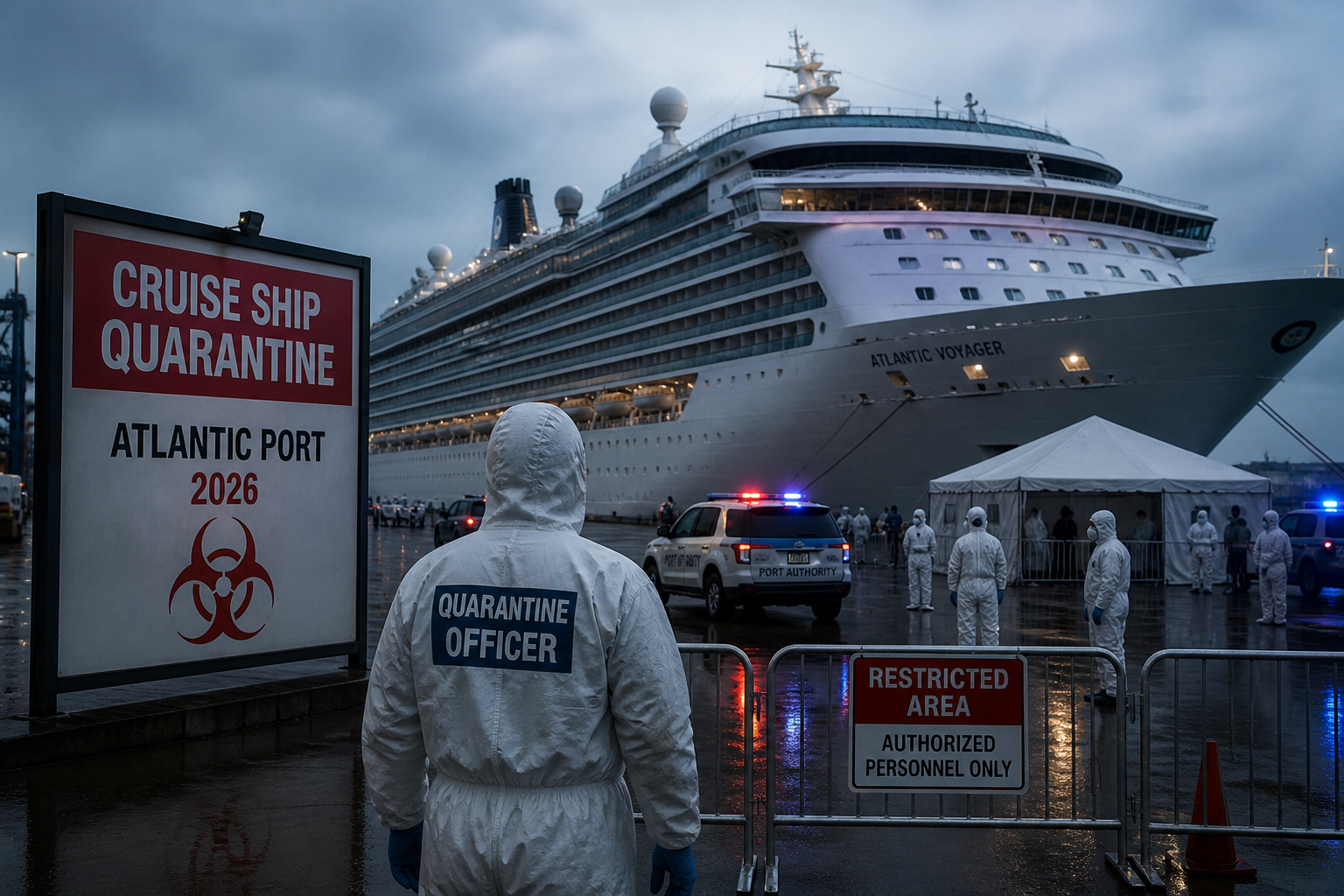 MV Hondius off Praia, Cape Verde — May 2026
Breaking News Photo
MV Hondius off Praia, Cape Verde — May 2026
Breaking News Photo
How Did Hantavirus Appear on a Cruise Ship at Sea?
The central mystery of this outbreak — puzzling epidemiologists worldwide — is the mechanism of transmission. Hantavirus is primarily a zoonotic disease, meaning it passes from infected rodents to humans through exposure to contaminated urine, droppings, or saliva. For it to appear on a ship far from land raises serious questions.
Experts have proposed two primary hypotheses. First, passengers may have been exposed to infected rodents or their droppings before boarding the ship — in South America, particularly Argentina or Chile, where hantavirus is endemic. Cases 1 and 2 are known to have traveled through Argentina prior to boarding in Ushuaia on April 1. The incubation period for hantavirus is typically 1–5 weeks, which is consistent with the timeline of symptom onset.
The second possibility is limited person-to-person transmission aboard the vessel. Only one strain of hantavirus — the Andes virus (ANDV), found predominantly in Chile and Argentina — is known to transmit between people via close contact or respiratory droplets. Cases 1 and 2 were confirmed to be in close contact (they were related), making Andes virus-linked person-to-person spread a plausible explanation for subsequent cases among crew. WHO has confirmed that viral genome sequencing is underway to determine the exact strain.
"There are two possibilities — either the passengers were exposed on land before boarding, or we are seeing limited person-to-person transmission of Andes virus aboard the vessel. Neither can yet be ruled out."— Dr. Amesh Adalja, Senior Scholar, Johns Hopkins Center for Health Security, May 4, 2026
The MV Hondius's route adds epidemiological complexity. The ship traveled to some of the world's most remote wildlife-rich islands, where passengers had close contact with wildlife including penguins, seabirds, and marine mammals. While Hantavirus is not associated with those species, the Patagonian region of Argentina — traversed during the voyage — has a well-documented hantavirus history. In 2018–2019, the Patagonian town of Epuyén experienced a cluster of over 30 hantavirus infections resulting in 11 deaths, notably involving person-to-person transmission.
Full Timeline: MV Hondius Hantavirus Outbreak (April–May 2026)
Hantavirus Symptoms: What to Watch For in 2026
According to the WHO, all MV Hondius cases presented with "fever, gastrointestinal symptoms, rapid progression to pneumonia, acute respiratory distress syndrome and shock." Illness onset dates ranged from April 6 to April 28. The speed of progression — from mild symptoms to life-threatening respiratory failure — is a defining and dangerous feature of Hantavirus Pulmonary Syndrome (HPS).
Because early-stage symptoms are nearly identical to influenza, HPS is frequently misidentified in the critical window where treatment is most effective. This delayed recognition contributed to fatalities in the MV Hondius outbreak, where ship medical staff initially treated patients for presumed viral illness before the severity of deterioration prompted escalation.
| Stage | Timeline | Key Symptoms (WHO-Documented) | Required Action |
|---|---|---|---|
| Early (Prodromal) | Days 1–5 after onset | Fever (38–40°C), headache, intense muscle aches (thighs, hips, back), fatigue, chills, dizziness, gastrointestinal symptoms (nausea, vomiting, diarrhoea — prominent in MV Hondius cases) | Isolate immediately. Call local health authority before visiting any clinic. Do not use public transport. |
| Intermediate (Cardiopulmonary onset) | Days 4–8 | Dry cough emerging, shortness of breath, chest tightness, blood pressure dropping. Sudden escalation in HPS — the "honeymoon period" ends abruptly. | Emergency medical care is essential immediately. Call emergency services. |
| Critical (Acute Respiratory Distress) | Days 5–10 | Pulmonary edema (lungs fill with fluid), acute respiratory distress syndrome (ARDS), shock, rapid organ failure. The MV Hondius victims progressed to this stage very rapidly. | ICU hospitalization with mechanical ventilation or ECMO is the only intervention. Mortality risk is very high without immediate intensive care. |
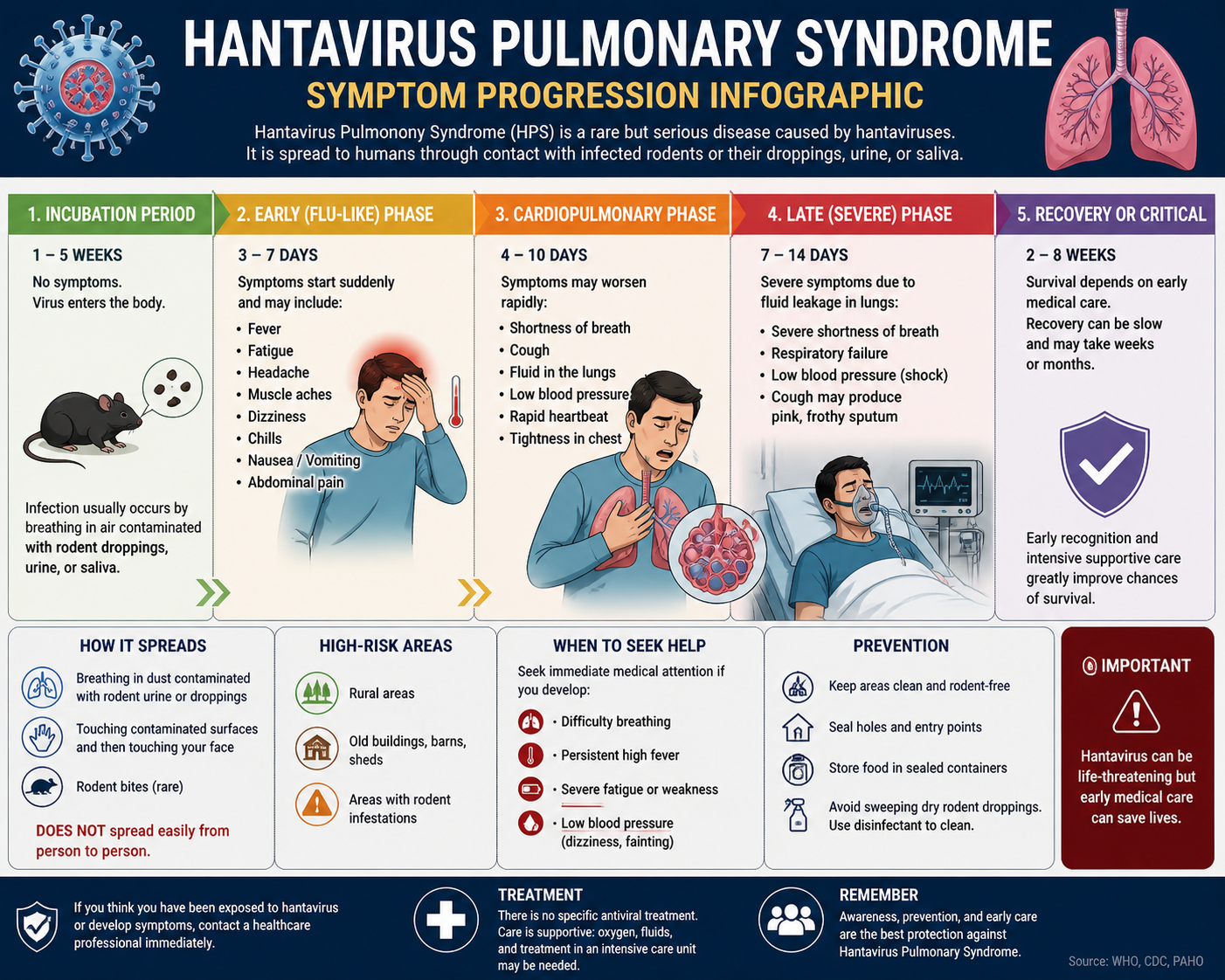 HPS Symptom Progression — 3 Stages
Medical Infographic
HPS Symptom Progression — 3 Stages
Medical Infographic
Global Health Response: WHO, CDC, ECDC and Dutch Government
The response to the MV Hondius outbreak has engaged health authorities across multiple continents. The WHO's Maria Van Kerkhove, Director of Epidemic and Pandemic Preparedness, confirmed that all passengers still aboard are not currently showing signs of illness — but they are under strict cabin isolation protocols while crew members work to disinfect the vessel.
WHO's European Regional Director Dr. Hans Henri P. Kluge issued a key statement on May 4, emphasizing that while WHO is "acting with urgency," the "risk to the wider public remains low," and explicitly stated there is no justification for travel restrictions. Dr. Kluge framed the event as a reminder of the importance of international health cooperation — noting its relevance given the United States' withdrawal from the WHO in January 2026 under President Trump, which has complicated some coordination channels with U.S. authorities.
The U.S. Centers for Disease Control and Prevention (CDC) is coordinating for the 17 Americans aboard. The Dutch government has announced preparation of two specialized aircraft, each equipped with medical equipment and staffed by trained medical crews, to conduct the evacuation of the two symptomatic crew members (Cases 5 and 6). A person linked to the passenger who died on May 2 is also expected to be evacuated.
The European Centre for Disease Prevention and Control (ECDC) is assisting with contact tracing across the 23 countries represented among passengers. Given the ship's voyage covered multiple jurisdictions, including UK overseas territory (Saint Helena), South Africa, and Cape Verde, the coordination challenge is immense. Contact tracing for passengers on the Saint Helena–Johannesburg flight on which Case 2 deteriorated is also underway.
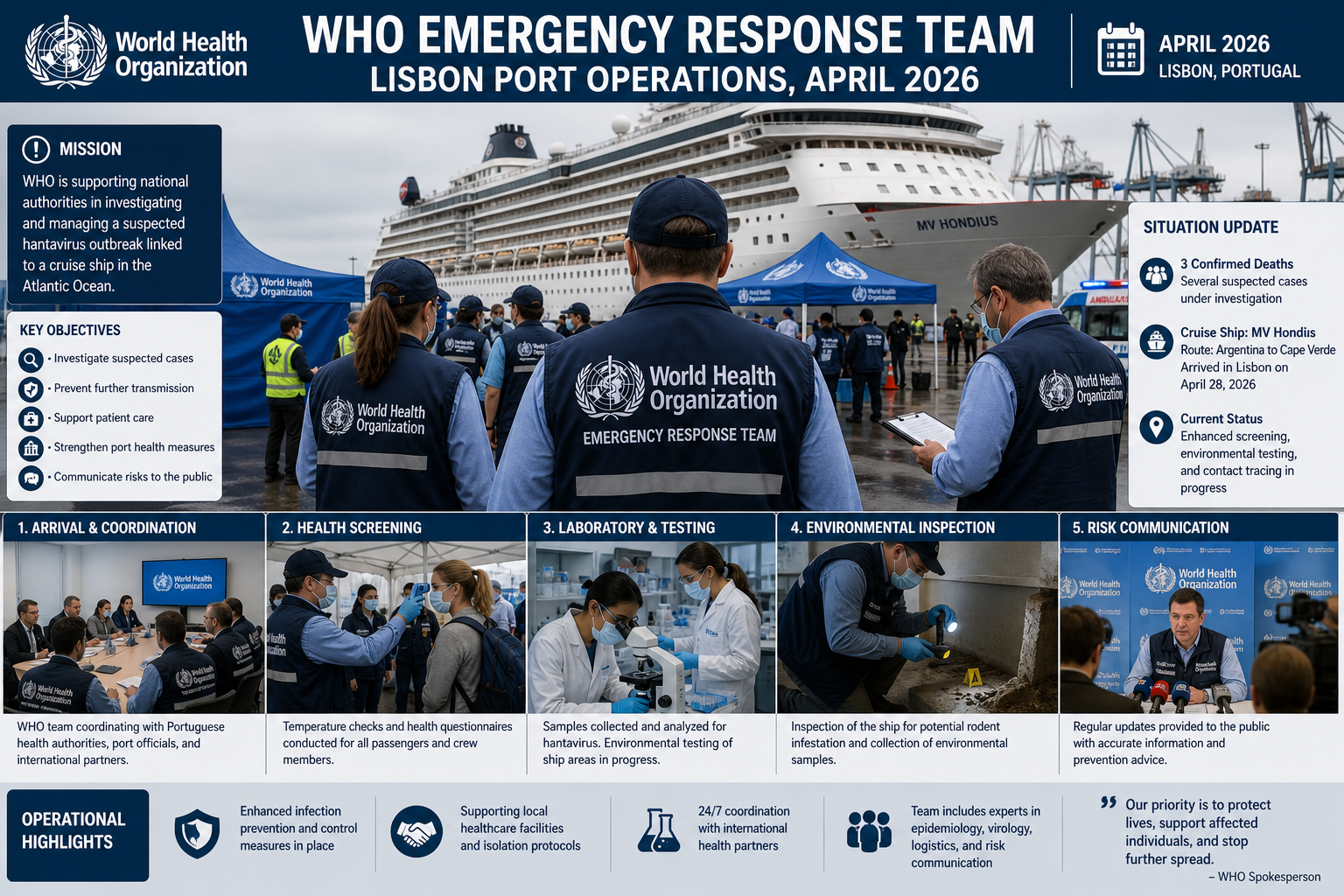 International Health Emergency Response — Atlantic 2026
News Photo
International Health Emergency Response — Atlantic 2026
News Photo
Is There a Treatment or Vaccine for Hantavirus? What Science Says
One of the most stark realities of this outbreak is that, as of May 2026, there is no specific approved antiviral drug or licensed vaccine for Hantavirus Pulmonary Syndrome available to the Western public. Treatment is entirely supportive: in an ICU setting, this means managing respiratory failure through mechanical ventilation or Extracorporeal Membrane Oxygenation (ECMO), maintaining blood pressure and organ function, and preventing secondary infections while the patient's immune system fights the virus.
Ribavirin, a broad-spectrum antiviral, has shown some efficacy against hantavirus strains causing Hemorrhagic Fever with Renal Syndrome (HFRS — common in Europe and Asia), but its effectiveness against Hantavirus Pulmonary Syndrome remains inconclusive in clinical trials. The National Institute of Allergy and Infectious Diseases (NIAID) has a vaccine candidate in Phase II trials; widespread public availability is not projected before 2028 at the earliest. China and South Korea have licensed vaccines against their regional HFRS hantavirus strains, but these do not protect against the HPS-causing strains predominant in the Americas.
Critically, the case fatality rate for HPS in the United States has historically been 35–38% even in clinical settings — and outcomes are heavily influenced by speed of diagnosis and access to intensive care. The deaths on board the MV Hondius are believed to reflect partly the challenge of identifying a rare viral hemorrhagic disease in the confined medical facility of an expedition ship days from the nearest advanced hospital.
🛡️ Hantavirus Prevention: If You Were On MV Hondius or Visited South America
- If you were aboard MV Hondius on its April 2026 voyage — contact your national health authority immediately and report your travel. You must self-monitor for symptoms.
- The WHO-recommended monitoring period for those potentially exposed to hantavirus is up to 45 days from last possible exposure. Any fever, fatigue, muscle aches, or breathing difficulty in that window must be reported urgently.
- If you develop symptoms, call ahead before visiting any clinic or hospital so isolation protocols can be prepared for you. Do not use public transport while symptomatic.
- If you experience acute shortness of breath or chest tightness, call emergency services immediately (911/999/112). HPS can progress from mild to life-threatening within hours.
- Travelers to hantavirus-endemic regions of South America (Argentina, Chile, Bolivia, Paraguay) should avoid contact with rodents, their nests, or droppings — especially in rural or wilderness settings.
- Never sweep or vacuum dry rodent droppings in any setting. Dampen with disinfectant spray first, wear N95+ protection, and dispose carefully in sealed bags.
- Ensure comprehensive travel insurance with emergency medical evacuation coverage for all future travel — the MV Hondius situation highlights how rapidly and how far from advanced care a medical crisis can develop at sea.
Broader Implications: Expedition Cruising, Zoonotic Risk, and Maritime Health Law
The MV Hondius operates as an expedition cruise vessel — a fundamentally different category from large luxury liners. With only 147–149 passengers and crew versus the thousands aboard typical cruise ships, expedition vessels attract travelers seeking close encounters with wildlife and remote wilderness. That intimacy with nature — the penguins, the seabirds, the remote islands — is the product's core appeal. It is also, as this outbreak starkly demonstrates, a potential vector for zoonotic disease exposure.
Unlike large cruise ships, which operate on commercial routes with established port health infrastructure, expedition vessels regularly visit locations with minimal healthcare facilities and complex jurisdictional overlaps. Saint Helena — where the body of the first victim was removed — has no hospital capable of advanced critical care. The absence of PCR diagnostic capacity on board meant that early cases were managed without knowing the pathogen involved.
Infectious disease specialists are now calling for mandatory pathogen surveillance protocols on all vessels operating in hantavirus-endemic regions, including South America, East Asia, and the Balkans. The International Maritime Organization (IMO) and WHO are expected to convene discussions on updating maritime health standards. Current international maritime health law — the International Health Regulations (2005) — requires ships to report communicable diseases but contains no specific provisions for zoonotic outbreak management aboard expedition vessels.
The geopolitical backdrop is also significant. With the United States having formally withdrawn from the WHO in early 2026, the 17 American passengers aboard MV Hondius are part of an outbreak being managed without formal U.S. federal coordination through WHO channels — a situation that Dr. Kluge obliquely addressed in his public statement. U.S. authorities are coordinating bilaterally, but the gap in the multilateral health system is being felt in real time.
Frequently Asked Questions: MV Hondius Hantavirus Outbreak 2026
What Happens Next: Investigation, Evacuation & Regulatory Outlook
As of May 5, 2026, the most immediate priority is the medical evacuation of the two critically symptomatic crew members aboard MV Hondius. Dutch authorities are preparing two specialized aircraft, though the timing and final destination — likely Las Palmas (Gran Canaria) or Tenerife in the Canary Islands — has not yet been confirmed. The vessel itself may sail to one of these ports for full passenger disembarkation, medical screening, and thorough disinfection.
For the 149 passengers and crew still aboard — including 17 Americans — strict cabin isolation continues. WHO's Van Kerkhove confirmed they are not currently showing illness signs, but the confined nature of the vessel means ongoing vigilance is essential. The remaining passengers hail from 23 countries, creating a significant contact tracing challenge for health authorities globally.
Longer-term, the MV Hondius outbreak is expected to catalyze urgent regulatory discussions at the International Maritime Organization and World Health Assembly level. Current International Health Regulations (2005) do not specifically address zoonotic outbreak protocols for expedition-class vessels. Public health advocates are calling for mandatory onboard PCR diagnostic capability for vessels operating in hantavirus and other zoonotic disease-endemic regions — technology that would have allowed earlier identification in this outbreak and might have prevented deaths. Expect formal IMO/WHO consultations to begin by mid-2026.