How to Cool a Room Without AC
Quick Answer
Without AC, a room heats up mainly from sunlight through windows, heat-generating devices, and still, trapped air. The most effective fixes address these three causes directly:
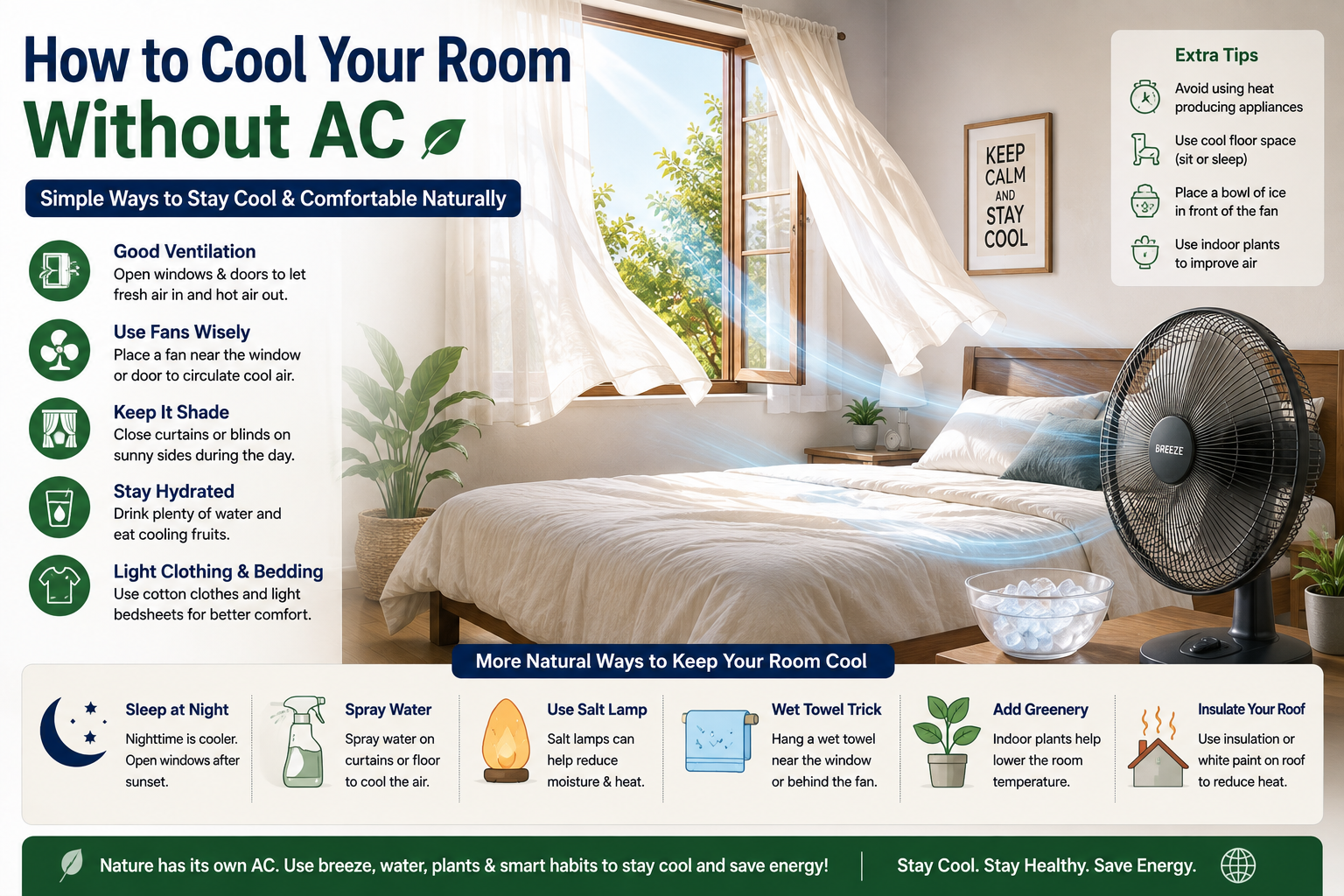
- Create airflow — moving air feels cooler even at the same temperature
- Block direct sunlight — curtains, blinds, or reflective film reduce heat gain through windows
- Time your window use — open when outside air is cooler, close when it's hotter
- Reduce indoor heat sources — electronics, lights, and cooking add heat to a room
- Use evaporative cooling — a damp cloth or shallow water tray in front of a fan adds mild cooling
- Improve insulation — gaps around doors and windows let hot air in

Watch: simple ways to cool a room without air conditioning.
Create a Cross-Breeze
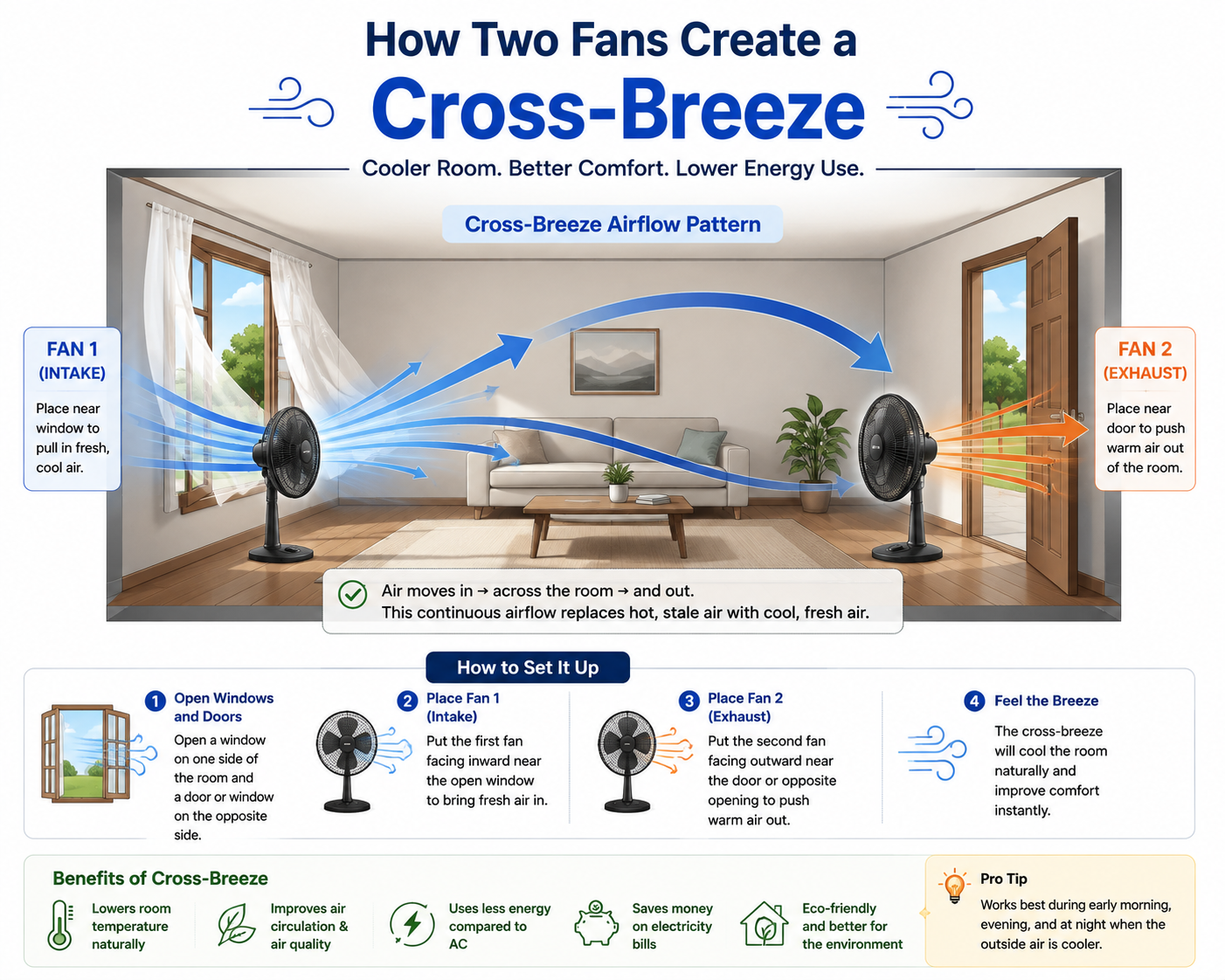
Moving air makes a room feel noticeably cooler than still air at the same temperature, because it speeds up evaporation of sweat from your skin. Position one fan blowing air in from a cooler side of the building and another blowing air out from a warmer side, ideally through opposite windows or doors, to create a through-draft rather than just recirculating warm air.
Block Sunlight Before It Enters
Once sunlight passes through glass and heats up furniture and walls, that heat is much harder to remove. Closing curtains, blinds, or reflective window film during the hottest hours of the day prevents a significant amount of that heat from building up in the first place. Light-colored or blackout curtains tend to block more heat than thin, light-colored fabric alone.
Time Your Windows Strategically
Keep windows closed and shaded during the hottest part of the day, then open them in the early morning or evening once outside air is cooler than the air trapped inside. This timing matters more than simply leaving windows open all day, which can let hot outside air in during peak heat.
Reduce Indoor Heat Sources
Electronics, incandescent lighting, and cooking appliances all release heat into a room. Turning off devices that aren't in use, switching to LED lighting, and avoiding oven or stovetop cooking during the hottest hours can measurably reduce how warm a room gets over the day.
Try Evaporative Cooling
Placing a shallow tray of water or a damp cloth in front of a fan adds a mild cooling effect as the water evaporates, similar in principle to a swamp cooler. This works best in drier climates — in already humid conditions, the effect is smaller and the added moisture can feel less comfortable.
Seal Gaps and Improve Insulation
Gaps around doors, windows, and vents let hot outside air seep in throughout the day. Simple door draft stoppers and window seals reduce this heat transfer and can noticeably improve how a room holds a cooler temperature, especially overnight.
| Method | Why It Helps |
|---|---|
| Cross-breeze with two fans | Moves warm trapped air out rather than just circulating it |
| Closing curtains/blinds | Blocks solar heat before it enters the room |
| Strategic window timing | Lets in cool air overnight, keeps out hot air by day |
| Reducing electronics/lights | Cuts down on indoor-generated heat |
| Evaporative cooling (damp cloth/tray) | Adds mild, short-term cooling through evaporation |
| Sealing gaps and drafts | Reduces hot air seeping in from outside |
Common Mistakes That Keep a Room Warm
- Leaving windows open all day, including during peak afternoon heat
- Using a single fan without a way for warm air to actually leave the room
- Keeping curtains open on sun-facing windows during the day
- Running heat-generating appliances during the hottest hours
- Ignoring drafts and gaps around doors and windows
When These Methods Aren't Enough
In very hot or humid climates, these strategies can meaningfully improve comfort but won't replicate what a proper AC unit does, especially during extended heat waves. If a room consistently stays uncomfortably hot despite these steps, it may be worth considering a fan-based evaporative cooler for drier climates, a portable AC unit, or getting an existing AC system inspected if cooling has become less effective than it used to be.
Thinking about adding or servicing an AC in Goa?
If these methods aren't cutting it during peak summer, our technicians can help with installation, service, or repair.
Explore AC Service in GoaFrequently Asked Questions
What is the fastest way to cool a room without AC?
Creating a cross-breeze with two fans — one blowing in from a cooler window and one blowing out from a warmer side of the room — is usually the fastest low-cost method.
Does closing curtains during the day actually help?
Yes. Closing curtains or blinds on sun-facing windows during peak daylight hours blocks a significant amount of solar heat gain before it enters the room.
Do wet towels or bowls of ice in front of a fan really cool a room?
They can provide a modest, temporary cooling effect through evaporation, but the impact is limited and short-lived compared to airflow and shading strategies.
Should windows be open or closed to keep a room cool?
Generally, keep windows closed and shaded during the hottest part of the day, then open them in the evening or early morning when outside air is cooler than inside air.
Does turning off electronics help cool a room?
Yes, to a small degree. Electronics and lights generate heat, and turning off unused devices reduces the overall heat load in the room.
Final Takeaway
Cooling a room without AC comes down to managing airflow and sunlight rather than trying to actively lower the temperature. A cross-breeze, well-timed windows, blocked sunlight, and fewer indoor heat sources together can make a real difference in comfort, even without mechanical cooling. For extended heat or humid climates, these methods have limits, and a fan-based cooler or AC may be worth considering.