How Much Does an AC Cost to Run for 1 Hour?

Key Takeaways
- Formula: Cost per hour = rated power (kW) × electricity rate (per kWh) — that's the whole calculation.
- A 1.5 kW AC (a common "1.5 ton" size) costs roughly $0.225/hour at a $0.15/kWh rate, or about ₹12/hour at ₹8/unit — but use your own numbers.
- Inverter ACs cost less than the peak-power number suggests once the room cools down and the compressor throttles back.
- Non-inverter ACs cycle on and off at full power rather than varying speed, so their average hourly cost depends on how long they stay "on" within that hour.
- The two numbers you actually need are on your AC's nameplate (rated power) and your electricity bill (rate per kWh) — not the tonnage.
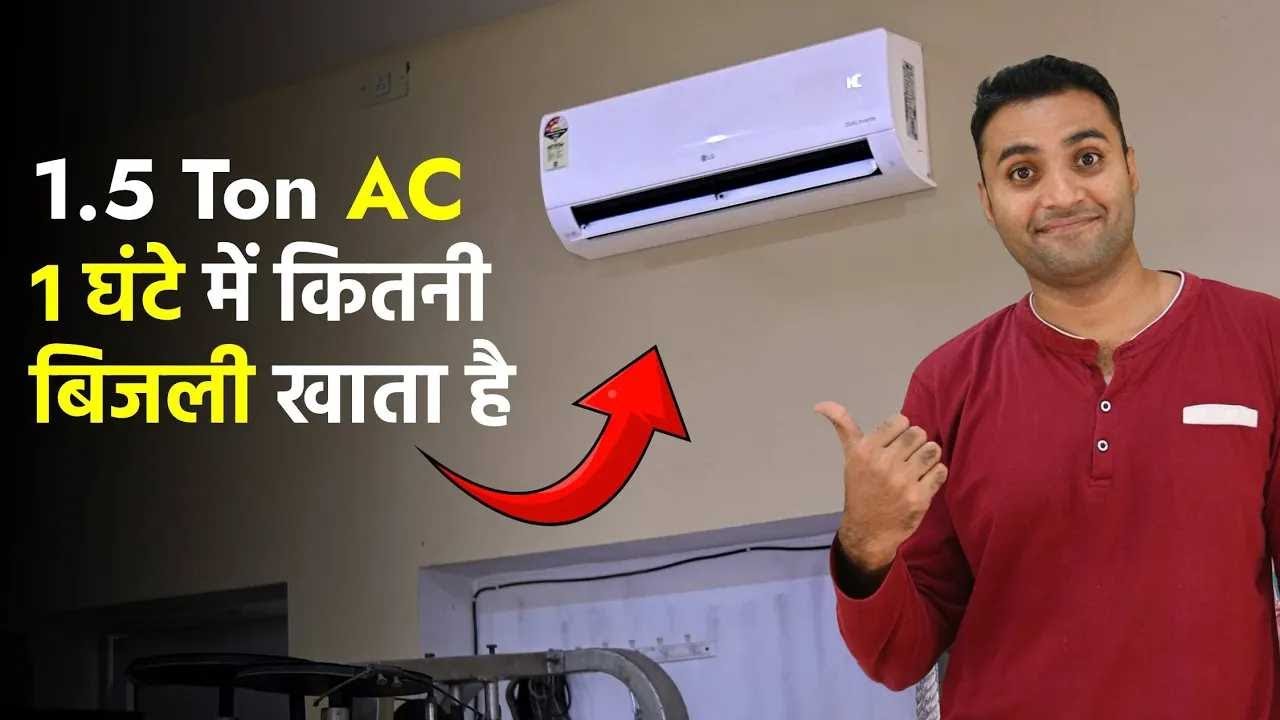
Watch: a quick walkthrough of the hourly AC cost calculation.
The Formula
The cost to run any electrical appliance for one hour follows the same basic formula:
An AC's power rating isn't its tonnage or cooling capacity — it's the electrical input power, usually listed on the nameplate as "power input" or "rated power consumption," measured in watts (divide by 1000 to get kW).
Worked Example
This is an illustrative example only — use your own AC's rated power and your own electricity rate for an accurate figure.
Suppose an AC has a rated power input of 1.5 kW, and your electricity rate is $0.15 per kWh:
- Cost per hour = 1.5 kW × $0.15 = $0.225 per hour
At a different rate, say ₹8 per unit (kWh):
- Cost per hour = 1.5 kW × ₹8 = ₹12 per hour
Your own numbers will differ based on your AC's actual power rating and the electricity rate you pay — always use your specific figures rather than these examples.
Why This Number Isn't Perfectly Constant
The calculation above assumes the AC runs continuously at its full rated power, but that's not quite how most ACs behave once you actually watch a meter. If you've ever stood next to a running AC with an energy monitor clipped on, you'll notice the number on the display doesn't sit still — it climbs hard in the first few minutes, then settles into a lower, steadier rhythm.
- Inverter ACs draw close to their maximum power during the first several minutes while cooling the room down, then reduce compressor speed once the target temperature is reached — meaning the average cost per hour over a longer period is often lower than the peak-power calculation suggests
- Non-inverter ACs cycle fully on and off rather than varying speed, so the "on" periods run at full rated power, but the AC isn't drawing power during "off" periods within that hour
- Outdoor temperature and room conditions affect how hard the compressor has to work, which can shift actual consumption up or down from the label figure
For a single hour of typical use, the simple formula above gives a reasonably close estimate — for longer or more precise tracking, a plug-in energy monitor gives the most accurate real-world figure.
A Second Scenario: Running It All Day vs. Just an Hour
The one-hour number is useful for comparing appliances, but most people actually want to know what a full day of use costs. Using the same 1.5 kW AC at $0.15/kWh from the example above, running it for 8 hours overnight would cost roughly $1.80 at the rated-power estimate — but if it's an inverter unit that spends most of that time at reduced speed after the initial cooldown, the real figure is often closer to $1.20–$1.40 in practice. That gap is exactly why a plug-in monitor is worth it if you're trying to budget precisely rather than just compare two units.

Comparing Different AC Sizes
| Approx. Cooling Capacity | Typical Rated Power | Note |
|---|---|---|
| 1 ton (~3.5 kW cooling) | ~1.0 kW | Suited to smaller rooms; lower hourly cost |
| 1.5 ton (~5 kW cooling) | ~1.5 kW | Common size for average bedrooms and living rooms |
| 2 ton (~7 kW cooling) | ~2.0 kW | Used for larger rooms; higher hourly cost at full power |
These are general reference ranges, not fixed values — actual rated power varies by brand, model, and efficiency rating. Always check your specific unit's nameplate.
How to Get a More Precise Number
- Find the rated power input on your AC's nameplate or manual (in watts, then convert to kW)
- Check your most recent electricity bill for your actual rate per kWh — rates vary by tariff slab and can change over time
- Multiply the two figures together for a per-hour estimate
- For a more accurate real-world reading, consider a plug-in electricity usage monitor, which measures actual consumption rather than relying on the rated label figure
Getting a higher hourly cost than expected?
If your AC seems to be costing more per hour than it should, our technicians in Goa can check for efficiency issues like low refrigerant or dirty coils.
Book an AC Inspection in GoaFrequently Asked Questions
How do I calculate what my AC costs per hour?
Multiply the AC's rated power in kW by your local electricity rate per kWh. For example, a 1.5 kW AC on a rate of $0.15 per kWh costs roughly $0.225 per hour, though inverter ACs often use less than their rated power once the room reaches temperature.
Does an inverter AC cost less per hour than a non-inverter AC?
Often yes, especially after the initial cooling period, because an inverter AC reduces compressor speed once the room reaches the set temperature, drawing less power than its rated maximum.
Is the hourly cost the same throughout the time the AC runs?
Not exactly. Most ACs draw more power in the first few minutes while cooling the room down, then use less once the target temperature is reached and maintained.
Where do I find my AC's rated power?
Check the nameplate on the indoor or outdoor unit, or the appliance's user manual, for a value listed as rated power input or power consumption in watts or kW.
Why do two AC units with the same tonnage have different hourly costs?
Star rating, inverter versus non-inverter technology, age, and maintenance condition all affect how much power an AC actually draws even at the same cooling capacity.
Final Takeaway
Working out what your AC costs per hour just takes two numbers: its rated power and your electricity rate. Multiply them together for a solid estimate — keeping in mind that inverter ACs often cost less than the peak-power calculation suggests once they've cooled the room down. For the most accurate figure, check your own AC's nameplate and your own electricity bill rather than relying on general examples.


